



Bachelor in Microbiology

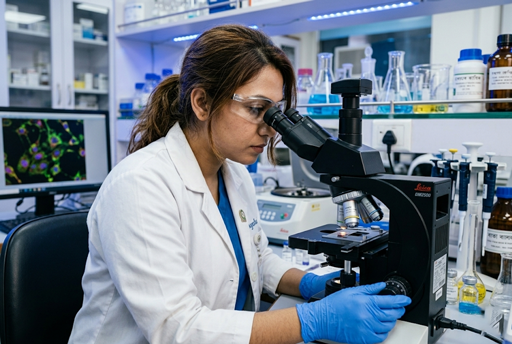
This programme focuses on the study of microorganisms such as bacteria, viruses, fungi, and parasites. Students learn how these microorganisms affect human health, the environment, and industries like food and pharmaceuticals.

Reasons For Pursuing A Bachelor In Microbiology

High Relevance in Healthcare & Industry

Microbiologists play key roles in medicine and food safety.

Expert Faculty

Learn from specialists in microbiology, immunology, and biotechnology.

Modern
Laboratory Facilities

Hands-on experience with microbial analysis and advanced lab techniques.

Comprehensive Curriculum

Covers bacteriology, virology, immunology, and molecular biology.

Research
Opportunities

Participate in studies on diseases, vaccines, and microbial applications.

Diverse
Career Paths

Opportunities in healthcare, pharmaceuticals, research, and food industries.

About the Course

Research Opportunities

Engage in projects related to disease control and microbial innovation.

Student Support

Academic and personal support throughout the programme.

Career Support

Guidance for internships, further studies, and job placement.

Comprehensive Curriculum

Covers microorganisms, infectious diseases, and laboratory techniques.

Library Access

Access to scientific journals, research articles, and lab resources.

Clinical Training

Practical sessions in culturing, identifying, and analyzing microbes.

Molecular Biology

Explore genetic material and cellular processes
in microorganisms.

Immunology

Learn how the immune system responds to infections.

Virology

Understand viruses and how they infect living organisms.

Bacteriology

Study bacteria and their roles in health and disease.

Core Modules

  • General Microbiology

  • Medical Microbiology

  • Immunology

  • Virology

  • Molecular Biology

  • Biochemistry

  • Microbial Genetics

  • Food Microbiology

  • Environmental Microbiology

  • Laboratory Techniques

About the Course

This programme equips students with scientific knowledge and laboratory skills to study microorganisms and their applications in healthcare and industry.

Microbiologist

Study microorganisms in laboratories for research or industry use.

Laboratory Scientist

Conduct tests to detect infections and support medical diagnosis.

Featured Top Universities

UCSI

Bachelors Of Applied Microbiology

A programme focused on microorganisms, covering
laboratory techniques and applications in healthcare,
food safety, and biotechnology.

Others Feature Course

Bachelor Degree

Biomedical Science

Focuses on human biology and diseases. Covers microbiology, immunology, genetics, and laboratory research for disease investigation.

Bachelor Degree

Bachelor Of Pharmacy

Professional healthcare program focused on drug therapy, pharmacology, and patient care in clinical and industrial settings.

Bachelor / Diploma

Bachelor Of Nursing

Advanced program building on foundational nursing knowledge, clinical practice, leadership, and evidence-based patient care.

Bachelor Degree

Bachelor Of Physiotherapy

Focuses on restoring physical movement and function. Covers musculoskeletal rehabilitation and therapeutic exercises for injuries.